

Living in Singapore has many advantages, such as enjoying the hot tropical climate all year round. There are, however, several disadvantages to living in a hot, humid climate. One of these is that this climate, combined with regular bouts of heavy rainfall, can cause painting in your home to peel and flake. This, in turn, creates a constant demand for waterproofing and painting contractors.
Hiring the right contractor is financially important, especially when it comes to avoiding aspects such as hidden costs and poor workmanship. It’s also crucial to ensure that the contractors are compliance-driven and must adhere to regulations such as HDB, MCST, and URA.
This article will guide you on finding contractors that fit into the Singaporean context and property market. We will also highlight contractor regulations, waterproofing, and painting. This will go a long way toward ensuring that you hire the best contractors for all your painting and waterproofing needs.
Where is Singapore on the World Map?
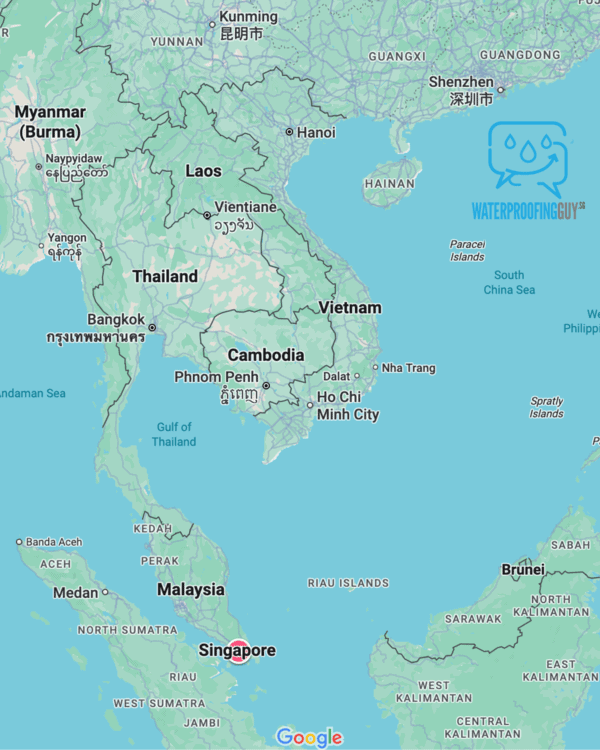
Singapore is well-known for its strategic island location at the heart of Southeast Asia. Another standout attribute is that Singapore is one of the world’s only fully sovereign city-states. This means that it’s an independent nation where the entire country functions as a single city. Two other sovereign cities in the same category are Monaco and the Vatican City.
Despite its compact size, Singapore became a sovereign nation in 1965, which is labelled as a country and a metropolis. This has a lot to do with the nation’s small size and remarkable ability to operate as a single urban entity. While the initial laws were based on the English system, legislation has evolved to meet the specific needs of the Singaporean culture.
What are Singapore's Neighboring Countries?
Singapore has two crucial neighbouring countries. Malaysia lies to the north and shares a border with this country via two overseas bridges, which have ferry connections to various Indonesian Islands. On the Southern side, Indonesia lies as a vast archipelago and also hosts ferry services to Islands such as Bintan and Batam.
What are Singapore's Borders and Border Lengths?
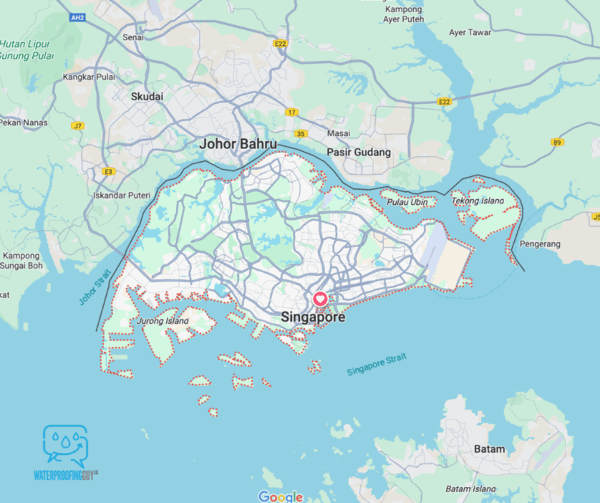
Singapore doesn’t have any land borders. As an island nation, Singapore is composed of a main island and 63 smaller islands. Coastal island borders are made up of the Johor-Singapore Causeway and the Woodlands Causeway. With no land borders, there are no land border lengths to mention.
What Are the Cities in Singapore?
Since Singapore is run as one city, there are no subdivisions. This means that there are no separate cities within its borders. Despite this, the country is divided into various districts and neighbourhoods. There are also several planning areas such as Choa Chu Kang, Yishun, and Tengah.
Which Continent is Singapore in?
Singapore is situated in Southeast Asia, which is a vast region of Asia situated east of the Indian subcontinent and South of China. Singapore is commonly referred to as “The Lion City” and is derived from its Sanskrit name “singa” (lion) and “pura” (city).
What is The Area of Singapore?
The total surface land area of Singapore is approximately 735.7km². These calculations are based on 2.515m High Water Mark cadastral survey boundaries. Singapore is generally flat, and most of the island lies within 15m of sea level. The highest point of the island’s surface reaches 164m.
It’s also worth noting that land reclamation is a long-standing and essential engineering practice in Singapore. This practice creates new land to accommodate the country’s growing infrastructure. Filling the original water bodies with sand and soil has enabled key developments such as the Changi Airport.
What is The Population of Singapore?
The current population in Singapore is 6.04 million as of June 2024, according to the latest statistics from the Singaporean government. Of this, at least 77.4% of Singaporeans live in the country’s HBD housing. This refers to the public housing flats that are built and managed by Singapore’s Housing and Development Board (HBD).
This housing concept was established in 1960 and has been designed to address the extreme shortage of adequate housing. These flats are sold at subsidised prices and can involve government grants. Since these spaces are government-regulated, there’s a policy that determines how often these spaces should be painted and maintained.
On average, this means each unit should be repaired and painted every five years. This leads to an extensive demand for quality contractors. Humidity, frequency of maintenance, and the need for ongoing repairs may make painting and repairs necessary more often.
What is the Time Zone in Singapore?
Singapore lies in the GMT+8 time zone. There’s no daylight savings system in place for the country, despite this being in effect for some other Asian countries. This means that Singapore is eight hours ahead of Coordinated Universal Time.
What is the Time Difference Between Singapore and India?
On average, Singapore is two hours and 30 minutes ahead of India. This means that 00:18 on Thursday in Singapore is 21:28 on Wednesday in India. This difference can be attributed to the unified time standard established by the British across Malaya (which includes Singapore). In 1982, the time standard was set at UTC +7:30 ahead of GMT during this period.
What is Singapore's Climate Like?
Singapore is well-known for its tropical rainforest climate. A hot, wet, and humid climate occurs all year round, meaning that Singapore has no distinctive seasons. Two monsoon periods and two inter-monsoon periods occur throughout the year. Temperatures are consistently high, and locals can experience average daily maximums ranging between 27 and 31°C.
The high humidity experienced in Singapore is exceptionally bad for your house’s paint, as it leads to longer drying times. This prevents proper curing and can lead to uneven finishes and streaks. In addition to this, humidity can also lead to mould forming when moisture is trapped in the paint. This makes quality waterproofing all the more essential.
What is the Average Rainfall in Singapore?
The average annual rainfall in Singapore is 2,739mm. The plentiful rainfall experienced by Singapore stems from the hot, tropical climate. Heavy rainfall is generally experienced on an average of 171 days per year.
Excessive amounts of rain can lead to leaks in homes and commercial buildings, making the need for waterproofing more essential. Additionally, the ongoing humidity affects the overall longevity of outdoor paint and may require homes and fences to be repainted more frequently.
Is Waterproofing a Property a Common Thing in Singapore?
Waterproofing and painting are directly related to each other. This is because quality waterproofing provides the essential barrier between your paint and moisture. Typically, waterproofing is usually done before painting to seal cracks and prevent moisture seepage.
Without waterproofing, paint peels, bubbles, and mould form. Some quality paints, such as elastomeric and weather shield, function as waterproof coatings. With this in mind, it’s essential to enlist the services of professional waterproofing and painting contractors simultaneously to get the most durable results for your painting project.
What Affects the Property Value in Singapore?
Property value in Singapore is largely determined by the overall quality of the home. This can be assessed by reviewing the renovation quality, waterproofing, and general painting condition. Prospective buyers will always check that maintenance and painting have been done in accordance with the local HBD and MCST rules.
Failure to do this will result in the new owner becoming responsible for the full costs of the renovations and repairs to bring the home up to standard. By ensuring that your home is regularly painted and maintained as per regulations, your space will remain in excellent condition, which is essential for any future sales.
What is Singapore's Urban Planning?
Singapore has a unique environmental policy, previously known as the “Garden City” policy (1960s to 1970s). Evolving to “City in a Garden” policy (2000s onwards), this initiative is state-led and aims to create a green, livable, and sustainable city by integrating nature throughout the urban environment. This is done by expanding green spaces, restoring ecological corridors, and utilising innovative designs like vertical greenery.
The City in a Garden philosophy also incorporates microclimate engineering. This process involves the use of green roofs and sky gardens to modify an area’s climate to increase comfort, functionality, or sustainability. In these spaces, the urban design, material choice, and vegetation all play a role in effectively controlling a thermal environment.
There are many benefits to a City in a Garden policy, including the following:
- Improved air quality
- Greater social cohesion and community engagement
- Increased biodiversity
- Improved water management
- Improved mental and physical health for citizens
What Are the Authorities Looking After Properties in Singapore?
There are several authorities put in place to look after Singapore. The most common of these are listed below:
- URA: The Urban Redevelopment Authority is the national authority responsible for land-use planning and conservation. Its goal is to guide Singapore’s physical development through long-term strategic plans.

- HBD: The Housing and Development Board is the statutory board responsible for public housing in the country. HDB provides affordable, well-designed flats through its public housing programme.

- BCA: The Building and Construction Authority is a statutory board under the Ministry of National Development responsible for developing and regulating the building and construction industry. The goal is to ensure a safe, sustainable, and liveable built environment.

- NEA: The National Environment Agency is a principal public organization responsible for ensuring a clean, sustainable, and healthy environment, over-seeing areas such as public health, waste management, resource efficiency, as well as resource efficiency.




How is the Singapore Property Market Currently?
The Singapore property market is currently experiencing a historical high. A strong demand for private homes has indicated a significant growth for 2025. While many locals live in subsidised housing, the private market, though expensive, sees continuous long-term appreciation potential. The market is expected to maintain long-term appreciation due to a limited land supply, strong local demand, and rising incomes.
What Does HDB Mean in Singapore, and How Many People Live in It?
The HDB in Singapore refers to the Housing and Development Board, a public housing authority that manages the nation’s affordable housing programs. The HDB provides subsidised flats (called HDB flats) are a popular and practical housing option for Singaporean citizens for about 80% of the citizens.
How Affordable is it to purchase a Condo Unit in Singapore?
Opting to purchase a condo unit in Singapore can be costly and requires significant financial resources. Current median prices range from SGD $1.5 million and upwards. It’s essential to point out that affordability varies significantly by location, unit size, and leasehold status.
Most buyers choose to secure a loan for up to 75% of the property value, with the remaining 25%covered by cash and the Central Provident Fund (CPF) savings. More affordable options can be found in older, leasehold units further from the Central Business District.
What is Landed Property in Singapore?
In Singapore, the term landed property refers to a residential building that is situated on its own private land. This can refer to terrace homes, semi-detached houses, or bungalows. These properties are scarce and are usually only affordable to wealthy residents.
A huge advantage of these properties is that owners can undertake alterations and additions to the building as they prefer. Unlike the HBD housing flats, these properties aren’t dictated by specific rules and regulations to make changes to their homes.
What is Industrial Property in Singapore?
Industrial property typically refers to the space used for industrial activities, such as warehousing, factories, and utility buildings. Most industrial properties in Singapore are leasehold. The average leases are either 30-year or 60-year options.
Industrial properties also refer to JTC estates, which are master-planned industrial, business, and lifestyle developments. These estates provide infrastructures, facilities, and support services for a wide range of industries.
What is Commercial Property in Singapore?
For the most part, commercial property refers to property or buildings used for business or work. The main functions of these properties are to generate profit through rent or capital gains. The most common types of commercial property include the following:
- Retail (shopping malls and restaurants)
- Industrial (offices and warehouses)
- Hotels
Is “Property Guru Singapore” the Easiest Platform to Find Property?
Yes, PropertyGuru is well-known for being the number one property portal in Singapore. This platform is easy to use and features reputable and extensive listings. With its comprehensive property information, it’s easy to see why it’s a top choice for buyers and renters.
PropertyGuru boasts market leadership and commitment to reliable data, which makes it a highly trusted and recommended starting point for property searches. A 2022 study has found that at least 85% of the platform’s users trust it for accurate and reliable property information. This goes a long way toward highlighting the platform’s credibility.
What Questions Should You Ask Before Engaging a Singapore Contractor?
Whether you’re planning to hire a waterproofing or painting contractor, it’s essential to ask the right questions about licensing, accreditation, HBD compliance, and work experience for the job at hand.
We’ve listed a few of the top pointers that you should assess and confirm before employing any type of contractor:
- Check that licensing and accreditations are current and valid
- Ask for and confirm HDB compliance (this is essential for work done in HDB flats)
- Confirm portfolio of work (check references online, contractor websites, and review platforms)
- Confirm that the contractors have insurance in place that covers damage to property and employee injury
- Ensure that the contractor has experience in the jobs you need done (check websites for before and after work samples)
- Clarify the transparency of quotes, payment schedules, as well as the project timeline and management plan
- Confirm whether they will be responsible for obtaining all necessary building permits for the project
- Check for warranties and workmanship guarantees
How do you verify a Singapore Contractor's Credibility?
If you’re going to hire a contractor, it’s essential to verify credibility. Here’s a quick way to do this:
- Check the contractor’s registration on the ACRA BIZFile + portal
- Search for official licenses and directories (such as the HDB renovation contractor directory, BCA directory)
- Review online presence for professional websites, social media pages, reviews, and check for unresolved issues and “too good to be true” offers
- Check for the companies’ CASE alert (Consumer Association of Singapore) to confirm compliance information
- Be wary of contractors that can’t provide a Certificate of Good Standing or relevant business profiles
How do you Compare Contractors in Singapore?
In addition to reviewing each contractor’s business credentials and expertise in the required field, you will also need to compare different options. This will ensure that you find the best contractor for the work you need done and will go a long way to helping you remain within your budget.
There are a few key factors to help you compare contractor services:
- Credibility: Compare compliance regulations (non-compliant contractors should be removed from your shortlist)
- Reliability: Based on the online reviews and your own communication with the contractor, which one seems to be the most reliable?
- Scope: Compare the services on offer and look for a contractor that can accommodate all your requirements
- Price: Compare prices for the same services (eliminate contractors that have prices that don’t align with industry standards
- Warranty: Check and compare warranties on offer
How Can You Avoid Hidden Costs and Disputes in Singapore?
No matter how well you review potential contractors, there is always the possibility that you will encounter hidden costs and price disputes. Fortunately, there are several ways to avoid having to deal with this. Consider the following:
- Do your best to find transparent and credible contractors
- Read contracts thoroughly and pay careful attention to the fine print
- Document all communications to ensure that you have proof of what has been arranged
- Request itemised contracts that give you a breakdown of what you’re being charged for each service
- Request confirmation in writing that all costs have been discussed and agreed on
What Red Flags Should You Watch for When Dealing with a Singapore Contractor?
During the review process, you may come across contractors that appear too good to be true or even display clear signs that their businesses are not above board. Some of the key red flags to look out for include the following:
- Can’t provide proof of license
- Refusal to supply you with a written contract or an itemised quote
- Demanding upfront payments
- Vague or unclear contract terms
- Poor communication
- Many bad reviews
- Questionable reputation
What Safeguards Can You Put in Place When Dealing With a Singapore Contractor?
You can also safeguard your interests when dealing with a Singapore contractor. Here are a few suggestions to make this easier:
- Ask for written milestones, which should highlight the date by which each phase or section of the job should be finished.
- Check and confirm insurance coverage.
- Insist on a clear contract outlining the scope and expectations.
- Be clear about payment schedules and methods.
- Review progress and address discrepancies immediately.
How do Singapore Property Rules Affect Contractor Work?
When planning your contractor work, it’s essential to note that a variety of strict property regulations directly affect what contractors can and can not do. This means that you will need to review these before you sign your contract. Certified contractors will be aware of these rules and will be able to advise you of them.
There are several pointers to keep in mind in this regard, and the most common are listed as:
- Different property types, such as HDB, condominiums, and landed homes, have separate rules, approvals, and working hours that will determine when contractor crews can work.
- These rules exist to ensure safety, noise control, and superior quality of work.
- Government authorities such as the HDB, URA, MCSTs, and BCA councils regulate contractor working hours and conditions. This means that you and your contractor will have to ensure that the guidelines for your home type are adhered to.
- Keep in mind that contractors must comply with these regulations to avoid fines, legal issues, or invalid warranties.
- It’s essential for HDB contractors to be used for all waterproofing and painting that needs to be done in HDB flats, as they will have the experience to perform these jobs according to regulations.
What are the HDB Renovation Guidelines in Singapore?
The HDB renovation guidelines in Singapore require homeowners to engage a registered contractor to apply for a permit for works such as structural changes. The renovation rules set by the HDB are to provide consistency in the housing projects.
Typical examples of this include restricting noisy work during odd hours. Work needs to be done between 9 am and 5 pm on weekdays. Guidelines also prohibit structural changes without approval. Waterproofing work in toilets must be done by HDB-licensed or BCA contractors. Violations can result in costly fines and mandatory reinstatement of the structure to its original state.
What About Condominiums and Landed Homes in Singapore?
Homeowners looking to renovate their condominiums and landed homes should keep the following in mind:
- Condos: To renovate or build in your condominium, MCST approval is required. This is especially essential for common areas such as balconies and external walls.
- Landed homes: There is more flexibility in performing renovations around your home, but URA planning restrictions still apply. This is done to conserve the house’s original structure and control façade changes.
Contractors must follow safety and noise regulations across all property types. This is an effective way to ensure that your renovation and maintenance work doesn’t interfere with your neighbours.
How Do You Manage the Contractor Relationship During the Project?
It’s important to stay involved in the maintenance or painting work throughout the project. This includes requesting weekly updates so that you can ensure that work is happening at the agreed-upon pace and time frame. Performing milestone checks also enables you to review the work that has been done so far, and request changes or improvements where necessary.
What Should You Do After the Project is Completed?
Once the project has been completed, you must inspect the whole work area to ensure that everything has been done satisfactorily. This includes work that you may already have reviewed during the milestone phase. Retain the warranty and be sure to enquire about the process to follow if you have an issue down the line.
Where Can You Find Trusted Contractors in Singapore?
If you don’t have any experience with hiring contractors, you may be wondering how you can be sure you’re going to end up choosing a trusted contractor. Fortunately, there are a few tips to help you with this:
- BCA registry: Check the BCA registry for listed contractors who perform work in the tasks you need done. If a contractor is listed on the BCA, you will have peace of mind that all their licenses are up to date and valid.
- CASE: Review your contractor’s details on the CASE platform for validity.
- Qanvast: This is a registered renovation platform that connects homeowners with reliable and screened contractors. There are also options to receive direct quotes to assist you with budgeting.
What is The Best Way to Engage a Singapore Contractor with Confidence?
Ensure that you engage with your Singapore contractor with confidence. You can do this by following the basic tips and guidelines that we’ve shared. The most significant include verifying credentials and licensing.
It’s also essential to compare quotes and insist on a transparent contract. Be clear about the work you need done and the time frame you have to work with. Perform regular reviews of the work to ensure that everything is going according to plan.
What Are the Transportation Conditions Like in Singapore?
Singapore’s current transportation system is characterized as being world-class because it’s an integrated system of efficient, safe, and affordable public transport. This typically includes the following:
- Well-maintained roads
- Extensive bus system
- MRT and LRT networks
Despite having a reliable and efficient public transport system, this can become overcrowded during peak hours. The government has implemented two key strategies to control vehicle numbers and traffic congestion. These strategies are listed as:
- ERP tolling system: The Electronic Road Pricing system is a congestion management technology that charges tolls for driving on certain roads during operating hours to reduce traffic congestion.
- Vehicle Quota System: This system caps the number of new vehicles that can be registered in Singapore.
What is the Official Language of Singapore?
There are currently four official languages in Singapore, which are listed as Mandarin Chinese, Tamil, Malay, and English. Malay is regarded as the official language, with English being the working language. All government, legal, trade, and commercial affairs are conducted in English.
What Are the Spoken Languages in Singapore?
The most commonly spoken is a combination of elements from English with grammar from Malay. This is known as Singlish and is well-known for being an informal, unwritten dialect used by many Singaporeans in their daily lives. Singlish is primarily used in casual settings and forms a unique part of Singapore culture.
How is the Singapore Economy?
The Singapore economy has been labelled as robust and resilient and has shown a remarkably healthy growth with a strong forecast for 2025. Sectors such as wholesale trade, manufacturing, finance, and insurance were responsible for the year-on-year expansion of 4%. The country also boasts a high GDP per capita of USD $85k.
What is Singapore's Per Capita National Income?
Singapore’s Gross National Income (GNI) per capita was approximately US$65,233 in 2019, according to a World Bank Report.
What is Singapore's GDP?
As of 2024, Singapore’s GDP was in excess of 500B. Key factors that contribute to economic success include the following:
- Anti-corruption policies
- Investment in education and human capital
- Development as a global financial hub
It’s interesting to note that Singapore is ranked 27th in the global GDP rankings with a 4.4% growth in 2024. It’s forecasted that this will increase by 2.3% by 2027.
Why is Singapore so Rich?
Singapore also has a reputation for being a wealthy country. The key way to achieving this stems from strategic government planning, which has evolved the country from a developing nation to a major trade hub. By switching to a service-based economy, Singapore was able to transition into a leading financial center in Asia. The country also boasts a robust banking sector and a thriving stock exchange.
In addition to this, Singapore’s strategic port location made it possible for the government to leverage itself as a major international maritime trade center. Consistently having stable political leadership and pro-business policies contributes to a stable environment. This goes a long way toward attracting global businesses and investors.
How Strong are Singapore's Armed Forces?
“Singapore is ranked 29 of 145 out of the countries considered for the annual GFP review”, according to globalfirepower.com in 2025.
The Singapore Armed Forces (SAF) is a strong and formidable military commonly recognised for its advanced technology and precision warfare capabilities. National service is mandatory in Singapore for all male Singaporean citizens aged 18 years. The SAF also has a annual defense budget of between 3-4% GDP.
Ministry of Defence (MINDEF) announced that the 2025 defense budget will be SGD$23,440,326,800, which is a 12.4% increase.
What is the Architectural Structure of Singapore?
For the most part, Singapore’s architectural structure boasts a dynamic mix of preserved European colonial styles and traditional shop houses. These often have bold and contemporary designs, such as the futuristic Marina Bay Sands. Housing is made up primarily of modern, well-maintained HDB flats.
The eco-friendly Gardens by the Bay reflects the country’s ongoing commitment to innovation and sustainability. One of the most unique attributes of Singapore is the Changi Airport. Not only does this space function as a world-class transit hub, but it also embodies Singapore’s efficiency, modernity, and commitment to world-class amenities. The airport is well known for being a landmark attraction and is a source of national pride among locals.
How are the Living Conditions in Singapore?
The living conditions in Singapore are generally regarded as being excellent. These conditions are characterised by high safety, political stability, clean public spaces, efficient governance, robust economy, and efficient infrastructure.
Despite all these positives, it’s essential to point out that the cost of living, especially housing and private education, can be very high. Residents have access to a wide range of recreational options and a generally pleasant environment.
How is Singapore Cuisine?
Singapore cuisine can best be described as a vibrant, multicultural fusion, well-known for its unique blend of Chinese, Malay, Indian, and Peranakan flavors. The cuisine in Singapore is affordable and delicious, and many popular dishes can be found at the famous UNESCO hawker culture. With these popular cuisines, you can look forward to bold flavours, fresh ingredients, and a broad combination of sweet, spicy, and savoury options.
What are the Most Popular Foods in Singapore?
Determining the “most popular” food in Singapore depends largely on your specific preference. The good news is that the cuisine in Singapore is as diverse as the people and the cultures. This means that you will easily find your favourite without too much effort. Here’s a list of some of the more popular dishes enjoyed by locals and visitors alike:
- Hainanese Chicken Rice (Singapore’s national dish)
- Laksa
- Chilli crab
- Kaya toast
- Nasi Lemak
- Bak Kut Teh
- Hokkien Mee
- Char Kway Teow
- Chai Tow Kway
- Wanton Mee
- Fish Bee Hoon
- Bak Chor Mee
- Oyster omelette
- Yong Tau Foo
- Roast duck
- Peranakan Food
- Zi Char Meal
- Rojak
- Satay
- Ice Kacang
What Religions are Practiced in Singapore?
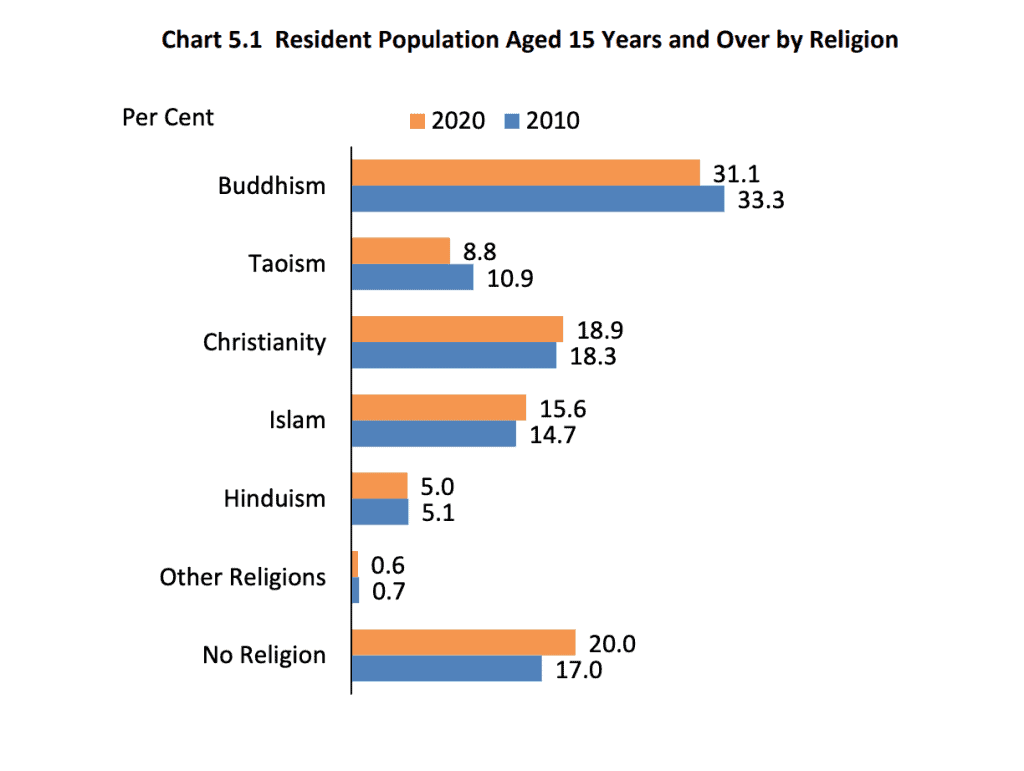
Singapore is well-known for being a multi-religious society, which means there is a wide range of mainstream and smaller religions being practiced. The most common of these include the following:
- Buddhism (the most popular)
- Christianity
- Islam
- Hinduism
- Taoism
- Folk Religion
- Sikhism
- Judaism
- Baha’i Faith
- Jainism
- Free Thinkers
- Believers in a Secular State (practice no religion)
What to do in Singapore?
Whether you live in Singapore, are visiting for a business trip, or coming as part of an international tourist package, you’ll soon find out that there’s a lot to do. A few of the top things to do include the following:
- Take a ride on the Singapore Flyer
- Explore the scenery from Marina Bay Sands
- Discover diverse cultures in Chinatown
- Indulge in exotic street foods at hawker centers
- Shop along Orchard Road
- Experience the city’s nightlife at Clarke Quay or Boat Quay
- Visit Universal Studios for a fun day out at the movies
- See the animals at the Singapore Zoo or Bird Paradise
- Explore Singapore’s history at the National Museum of Singapore
- View local and international art at the National Gallery of Singapore
What are the places to visit in Singapore?
It’s a well-known fact that Singapore is one of the most popular tourist attractions in Asia. A few of the more popular places to visit are listed below:
- Gardens by the Bay
- Little India
- Marina Bay Sands
- Merlion Park
- Singapore Flyer
- Singapore Zoo
- Night Safari
- Singapore Botanic Gardens
- Chinatown
- Buddha Tooth Relic Temple
- Sentosa Island
- Art Science Museum
- Hawker Centers
- National Museum of Singapore
- Wings of Time
- Singapore Cable Car
- Universal Studios Singapore
- Kampong Glam
- Dolphin Island Singapore
- Singapore Mega Adventure Park
What is the Capital of Singapore?
Since Singapore is a city-state, it means the country is its own capital. The city of Singapore functions as the nation’s administrative center, housing key government buildings and operating from its central downtown core. The President’s official residence is also located downtown.
Who is the President of Singapore?
Tharman Shanmugaratnam is the current President of Singapore. Singapore has both a President and a Prime Minister. The President serves as the Head of State, while the Prime Minister is head of the government and leads the executive branch. Typically, the President appoints the Prime Minister and forms the cabinet. To date, there have been nine presidents since 1965. Here’s a brief overview of their key information.
| Name of President | DOB | Period in Role | DOD |
|---|---|---|---|
| Yusof bin Ishak | 12-08-1910 | 1965-1970 | 23-11-1970 |
| Benjamin Sheares | 12-08-1907 | 1971-1981 | 12-05-1981 |
| Devan Nair | 05-08-1923 | 1981-1985 | 06-12-2005 |
| Wee Kim Wee | 04-11-1915 | 1985-1993 | 02-05-2005 |
| Ong Teng Cheong | 22-01-1936 | 1993-1999 | 08-02-2002 |
| Sellapan Ramanahan Nathan | 03-07-1924 | 1999-2011 | 22-08-2016 |
| Tony Tan Keng Yam | 07-02-1940 | 2011-2017 | n/a |
| Halimah Yacob | 23-08-1954 | 2017-2023 | n/a |
| Tharman Shanmugaratnam | 25-02-1957 | 2023-present | n/a |
Who is the Prime Minister of Singapore?
Lawrence Wong is the current Prime Minister of Singapore. There have been four active Prime Ministers of Singapore. Here’s a brief overview of key information.
| Name of PM | DOB | Period in Role | DOD |
|---|---|---|---|
| Lee Kua Yew | 16-09-1923 | 1959-1990 | 23-03-2015 |
| Goh Chok Tong | 20-05-1941 | 1990-2004 | n/a |
| Lee Hsien Loong | 10-02-1952 | 2004-2024 | n/a |
| Lawrence Wong | 18-12-1972 | 2024-present | n/a |
Which Political Party is Running Singapore?
The People’s Action Party (PAP) is the current political party running Singapore. This is as a result of them having won a significant majority of seats in the recent 2025 general election. They have held the same dominant position in the nation’s political landscape for decades. In the May 2025 elections, PAP secured an impressive 87 out of 97 parliamentary seats.
PAP claims to stand for the core values of being honest, meritocratic, multiracial, and self-reliant. The party was founded in 1954 to fight for independence, and the party strives to ensure justice and fairness for all citizens, regardless of race, language, or religion.
How Many Political Parties are There in Singapore?
There are nine political parties, including the ruling party, that were present in the 2025 General Election. A brief overview of their key info is listed in the table below.
| Name of Party | Founded | Founded By | Core Mission |
|---|---|---|---|
| People’s Action Party (PAP) | 1954 | Lee Kuan Yew | Meritocratic, multiracial, self-reliant, and inclusive of all. |
| Worker’s Party (WP) | 1957 | David Marshall | Advocates for governmental accountability and affordable living for all citizens. |
| Progress Singapore Party | 2019 | Tan Cheng Bock | Believe in principles of inclusivity and non-discrimination. |
| Singapore Democratic Party | 1980 | Chiam See Tong | Upholding the values associated with a thriving democracy. |
| National Solidarity Party | 1987 | Kum Teng Hock Soon Kia Seng | Advocate minimum living wage, free preschool education, affordable housing, and accessible healthcare. |
| People’s Voice Party | 2018 | Lim Tean | The mission statement involves lower cost of living, better jobs, and more affordable GST. |
| Reform Party | 2008 | J.B. Jeyaretnam | Strive to promote political, social, and economic reform. |
| Singapore People’s Party | 1994 | Sin Kek Tong | Promotes the traditional Chinese way of life. |
| Red Dot United | 2020 | Ravi Philemon Michelle Lee | Centers on bridging the class divide in Singapore. |
What is Singapore's Policy?
For the most part, Singapore has several policies that center on sustained economic growth through a general free-market approach, macroeconomic stability, and strong international partnerships. These approaches are combined with a robust national defence and a highly progressive fiscal system.
A dominant multiracial policy aims to promote racial harmony and social cohesion through a system of policies and legislation. These policies are implemented across all aspects of the Singaporean landscape, which includes the Ethnic Integration Policy in public housing, recognition of ethnic mother tongues, and a recently passed Maintenance of Racial Harmony Bill. The goal is to preserve individual cultural identities while at the same time fostering a shared sense of nationhood and economic openness.
When was Singapore Founded?
British statesman Stamford Raffles negotiated a treaty to create a trading port on the island in 1819. As a result of this, Singapore was a British colony for 144 years until it eventually became a part of Malaysia.
When Did Singapore Gain Independence?
Singapore gained its independence on 9 August 1965 when the country separated from Malaysia. The separation was a result of various political and economic differences between the ruling parties of Singapore and Malaysia. These differences created communal tensions, which resulted in widespread racial riots in July and September 1964.
By separating Singapore and Malaysia, both leaders believed that the arrangement would afford Singapore the “best of both worlds”. This refers to Singapore becoming free from the racial and communal tensions that were plaguing Malaysia. At the same time, Singapore would maintain access to the Malaysian market for continued economic development.
When is Singapore's National Day?
Singapore’s National Day is listed as 9th August and is the celebration of the Independence of Singapore from Malaysia. On this day, Singaporeans celebrate their national identity and unity among many diverse cultures. Of all the various holidays celebrated in Singapore, the National Day is the most widely celebrated.
What is the History of Singapore?
Singapore has a long and colourful history, which begins with early settlements such as Temasek, when the area was a simple fishing village. In the 13th century, a prince from Palembang, Sri Tri Buana, is reputed to have encountered a magical beast in the village. This led him to name the island “Singapura”, which translates to “The Lion City”.
During the 14th century, the island became a thriving trading port and was frequently visited by Chinese traders. In 1819, a British trading post was established on the island and quickly became a free entry point for merchants and migrants from around the world. This was essentially the beginning of Singapore’s cultural diversity.
During World War II, Singapore was briefly occupied by the Japanese and later became a British Crown Colony. The country was eventually granted self-governance in 1959. Lee Kuan Yew became the first Prime Minister. Later, in 1963, the country merged with Malaysia but separated from it in 1965. Singapore became a fully independent nation on August 9, 1965.
What is the Flag of Singapore?
The flag of Singapore is red, white, and has five stars and a crescent in the red section. This particular design was adopted in 1959 when the country became a self-governing entity within the British Empire. The red colour symbolises universal brotherhood and equality. White represents virtue and purity, with the crescent signifying a young and ascending nation. The five stars symbolise the ideals of democracy, peace, progress, justice, and equality.
Failure to do this will result in the new owner becoming responsible for the full costs of the renovations and repairs to bring the home up to standard. By ensuring that your home is regularly painted and maintained as per regulations, your space will remain in excellent condition, which is essential for any future sales.
What Other Countries are Similar to Singapore?
While Singapore may seem like an ultra-unique concept, there are a few similar countries. Monaco, Luxembourg, and Hong Kong are similar to Singapore because they are all small, wealthy independent city-states. All of these countries have become global hubs for finance and business and boast pro-business policies, international connectivity, which attracts wealthy companies and individuals.
Additionally, other factors that these countries have in common are that they are all tax havens, well-known for low and simplified tax frameworks. These countries are also all strategically located, which makes them ideal gateway countries. Their accessibility contributes to their economic success and international importance.